Beauty Device Hype Check: Claims vs Evidence
Ten common beauty-device marketing claims checked against ASA rulings, CAP guidance and published trials, with an honest verdict on every one.
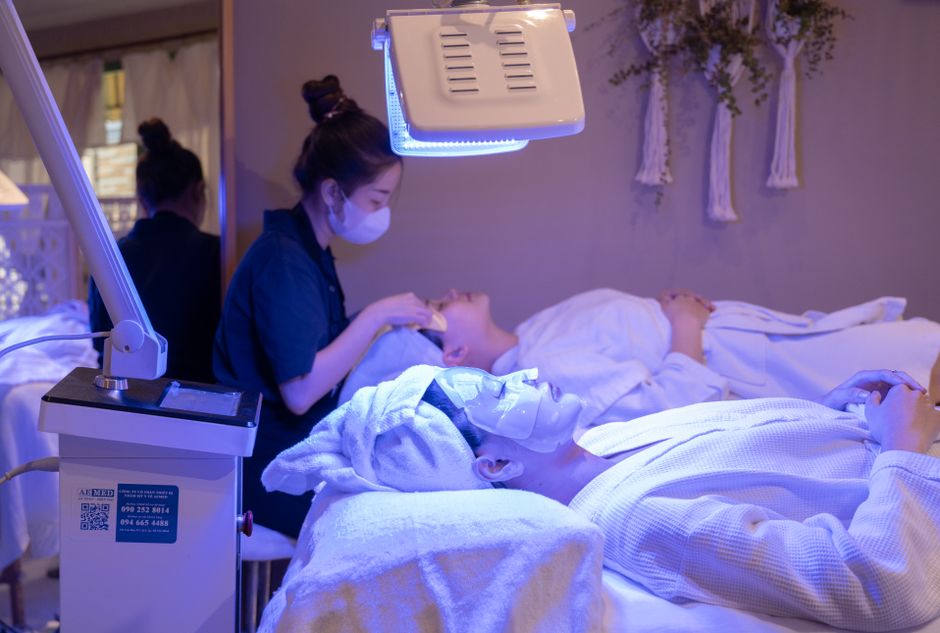
Beauty-tech marketing is a claims machine: permanent hair removal, a workout for your face, clinically proven in four weeks. This index checks the claims UK shoppers meet most often against what the regulator has actually ruled and what published trials actually measured, and gives each one a plain-language verdict.
Every verdict cites a source we fetched and read in full: rulings and standing guidance from the ASA (the Advertising Standards Authority, the UK's advertising regulator) and its code-writing arm CAP (the Committee of Advertising Practice), plus controlled trials and meta-analyses indexed on PubMed (the US National Library of Medicine's research database). Where the evidence is thin, the verdict says so - 'not supported' is a result, not a failure.
How do we judge these claims?
Each claim follows the same shape: what brands say, what the evidence shows, a verdict. The verdicts use four honest tiers. Ruled against means the ASA has upheld a complaint against that wording. Not supported means no fetched evidence backs the claim as made. Supported when qualified means the claim survives only with its small print attached. Supported with caveats means real controlled evidence exists - and the caveats still matter.
One principle from the ASA's 2026 Beauty Pie ruling anchors the whole page: evidence generated on a different device, protocol or setting cannot substantiate a claim about the product in the box. A wavelength having research behind it does not mean the mask you bought does.
LED masks and red light
LED MASKS
Clinically proven to reduce wrinkles in four weeks? Ruled against
- Brands say Proof with a deadline
- Verdict Not supported as stated
- Key source ASA ruling, 10 Jun 2026
What brands say. A proof claim with a deadline attached. The wording the ASA examined was 'clinically proven to reduce wrinkles in 4 weeks', on an LED face mask.
What the evidence shows. The ASA's ruling of 10 June 2026 found the product-specific studies unpublished, with 28 and 20 participants, no control or placebo groups and no blinding - and one confounded by extra skincare products not sold with the device. Studies on comparable devices could not fill the gap, because they differed in delivery method, treatment duration, frequency and settings.
Verdict. Not supported as stated. The underlying wavelengths have a research basis, but a time-bound 'clinically proven' claim needs robust, product-specific, controlled evidence - and at least one has now been formally ruled against.
Evidence for a wavelength is not evidence for the device in the box.
LED MASKS
Can a mask clear blemish-prone skin? Regulated claim
- Brands say Clears spots at home
- Verdict Needs MHRA registration
- Key source Four ASA rulings, Nov 2025
What brands say. Wording about tackling or clearing spots, or targeting the bacteria involved, on blue-light settings.
What the evidence shows. This one is a regulatory line rather than an evidence line. In November 2025 the ASA upheld four rulings against LED mask advertisers for making medicinal claims without registration with the MHRA (the Medicines and Healthcare products Regulatory Agency, the UK's medicines and devices regulator), as recorded in a rulings round-up by law firm Browne Jacobson. The MHRA's position in those cases put blemish-related redness on the medical side of the line, and UKCA certification alone did not make the claims permissible.
Verdict. Not a claim a cosmetic device may make in UK advertising without MHRA registration, whatever the evidence behind it.
A brand still making this claim is telling you something about the rest of its marketing.
LED MASKS
Are at-home masks as strong as in-clinic LED? Not supported
- Brands say Salon strength at home
- Verdict Lower power by design
- Key source Peer-reviewed review, 2024
What brands say. Professional-grade or salon-strength framing on consumer devices.
What the evidence shows. The one peer-reviewed review of the home-device category, Bu et al. 2024, states plainly that home devices run at lower energy output than medical devices - by design, because no professional supervises their use. The ASA's transfer rule compounds this: results generated on different equipment, protocols or settings cannot substantiate a home device's claim.
Verdict. Not supported. No fetched evidence shows result parity, and the category's own design constraints argue against it. The honest framing is dose and patience: lower output can still do something over more sessions, but 'salon-strength' on a consumer device is marketing, not a spec sheet. Our LED mask vs red light panel guide covers how the form factors differ.
'Salon-strength' on a consumer device is marketing, not a spec sheet.
LED MASKS
Does red light improve the look of fine lines? Supported with caveats
- Brands say Collagen-boosting, firming
- Verdict Real trials, real caveats
- Key source Two RCTs + category review
What brands say. Collagen-boosting, firming, rejuvenating.
What the evidence shows. This is the genuinely evidenced corner of the LED story. Lee et al. 2007, a randomised, placebo-controlled, double-blinded split-face trial of 76 subjects, measured wrinkle reduction of up to 36 percent and elasticity gains of up to 19 percent at red and near-infrared wavelengths, with skin samples showing increased collagen and elastic fibres. Mota et al. 2023, a split-face trial of 137 women, found periocular wrinkle volume down roughly 30 percent in four weeks - and no improvement in hydration or elasticity, a null result that should travel with the headline number.
Verdict. Supported in its careful form. Controlled trials show measurable improvement in the look of fine lines at these wavelengths. What stays unproven is everything brands bolt on: speed, permanence, parity with trial hardware, and any specific percentage transferring to the device you bought. The wider home-device literature counts only five randomised controlled trials among 18 studies, with follow-up never beyond 12 weeks.
The wavelengths have earned their evidence. The promises stacked on top have not.
IPL hair removal
IPL
Permanent hair removal Ruled against
- Brands say 'Here to stay'
- Verdict Reduction, not removal
- Key source ASA ruling, 7 Jun 2023
What brands say. Wording in the family of 'permanent visible hair removal' and 'hair removal that's here to stay'.
What the evidence shows. The ASA upheld against exactly this wording on an at-home IPL (intense pulsed light) device in June 2023. Its reasoning was about consumer interpretation as much as data: shoppers read 'permanent' as regrowth stopping altogether, while the evidence showed a reduction in regrowing hairs that depends on continued regular use. CAP's standing guidance on hair removal records the same conclusion.
Verdict. Not supported, and formally ruled against. At-home IPL reduces how much hair grows back while you keep using it - it does not end regrowth. That maintenance point is also the honest answer to whether a device is worth it; our guide to how long at-home IPL takes to work covers the realistic timeline.
IPL reduces regrowth while you keep using it. Nothing in the evidence says it ends it.
IPL
Permanent hair reduction in 12 weeks? Not supported
- Brands say Softened claim, hard deadline
- Verdict Week-counts are marketing
- Key source CAP advice online
What brands say. A softened permanence claim with a timeframe attached - 'permanent hair reduction in just 12 weeks' is the recorded example.
What the evidence shows. 'Reduction' is the defensible word, but it is not a free pass. CAP's guidance records that one brand's version of this claim failed substantiation: the clinical studies plus self-reported surveys behind it were not judged suitably robust for the specific claim made.
Verdict. Directionally the right wording, but a time-bound version has already failed the evidence bar. Treat any specific week-count as marketing until the brand shows product-specific controlled evidence for that number.
'Reduction' is the defensible word. The deadline attached to it usually is not.
IPL
What does a compliant claim look like? Supported when qualified
- Brands say 'Prevents re-appearance'
- Verdict The qualifier does the work
- Key source CAP advice online
What brands say. This entry is the counter-example, so the index is not purely negative. One IPL range is marketed as preventing the re-appearance of hair.
What the evidence shows. CAP records that wording as acceptable - specifically because the marketing made clear the product only works with continued regular use. The qualifier is what made it compliant.
Verdict. Supported when qualified. The presence or absence of that 'only with continued regular use' small print is one of the fastest honest tells for sorting careful brands from careless ones.
Look for the small print admitting the device only works while you keep using it.
IPL
Does IPL work on every skin tone and hair colour? Not supported
- Brands say Suits everyone
- Verdict Fails on both halves
- Key source CAP + our own guide
What brands say. Broad suitability framing - for everyone, on any hair.
What the evidence shows. CAP warns advertisers against implying light-based hair removal suits all skin types, and against blurring laser and IPL as if they were interchangeable. The mechanism depends on contrast between hair pigment and skin: manufacturers themselves rate devices to Fitzpatrick types I to IV (the dermatology scale for how skin responds to sun), with type V reachable only on specific devices with cooling and a skin-tone sensor, and type VI not covered. Light, grey, white and red hair responds poorly on any tone.
Verdict. Not supported as a blanket claim; it fails on tone and on colour. 'All skin tones and hair colours' is broader than any evidence and broader than careful brands' own small print. The type-by-type detail lives in our IPL skin-tone safety guide.
The physics is contrast. A brand claiming everyone is ignoring its own ratings table.
Microcurrent
MICROCURRENT
Is microcurrent a workout for your face? Modest support only
- Brands say Lifts, sculpts, banks gains
- Verdict 'Temporarily tones' is the ceiling
- Key source CAP + one home RCT
What brands say. Lifting and sculpting framing: 'a workout for your face', defined contours, a non-surgical lift, cumulative gains from daily use.
What the evidence shows. CAP's guidance on electrical devices sets the ceiling in one sentence: marketers should not claim more than that a device 'temporarily tones and tightens the skin'. The ASA has not seen convincing evidence that electrical-current devices reduce the signs of ageing long term, and the one microcurrent-specific ruling CAP names (Nouveau Beauty Group, 2016) failed on evidence that was not independently conducted. The published base is nearly empty: a PubMed search for microcurrent facial rejuvenation returns four records, none of them a randomised controlled trial of an at-home microcurrent-only device. The one home-device RCT in the category review (108 subjects, 12 weeks) did measure improved radiance, tone and an 18.7 percent increase in muscle thickness - and followed nobody past 12 weeks.
Verdict. Supported only in its most modest form. 'Temporarily tones' is defensible, and one trial gives the workout metaphor its kernel of truth. Everything else - a lasting lift, sculpted contours, gains that bank up and stay - is not supported, and no published study measures what remains after you put the device down. Our microcurrent beginners' guide has the honest version of what these devices do.
The regulator's word 'temporarily' is doing all the honest work in this category.
Laser and LED hair-growth devices
HAIR GROWTH
Do laser caps and combs give fuller-looking hair? Overstated, not empty
- Brands say Clinically proven regrowth
- Verdict Density moves; results vary
- Key source Two meta-analyses + CAP
What brands say. Regrowth framing on laser caps, combs and helmets using LLLT (low-level laser therapy, the trade's name for these red-laser devices): clinically proven regrowth, thicker fuller hair, and heavy leaning on 'FDA-cleared'.
What the evidence shows. Regulator first: CAP's guidance treats prevent-or-cure claims in this area as medicinal claims needing MHRA authorisation; only softer appearance claims are open to these ads, those still demand robust evidence, and a laser comb has already been ruled against on wording as soft as 'a healthy thick head of hair'. On 'FDA-cleared': the FDA's own 510(k) page defines clearance as substantial equivalence to a device already on sale - a comparative judgement, not the efficacy proof that 'approved' means for medicines. The trial base is the strongest on this page: two meta-analyses (Perez 2025, pooling 38 studies and 3,098 patients, and Liu 2019) find significant measured hair-density gains during use - alongside between-trial disagreement (heterogeneity above 80 percent) that both teams flag when caveating their own pooled numbers.
Verdict. Overstated as sold, but not empty. Measured density does move in trials, which in appearance terms means somewhat fuller-looking coverage for some users. The unsupported parts are the ones on the box: guaranteed regrowth, mirror-visible transformation, and 'FDA-cleared' dressed up as 'FDA-proven'. When trials disagree with each other this much, 'results vary' is a finding, not a hedge.
'FDA-cleared' is a comparison to an existing device, not proof the device works.
What patterns should you look for?
Five transferable tests fall out of these verdicts, and they work on products this page has never seen.
Evidence must match the product. Trials on a different device, protocol or setting cannot substantiate the one in the box - the principle the ASA applied in 2026, and the single most reusable test here.
Look for the qualifier. Careful brands write 'only with continued regular use' into the claim. Its absence is a tell, not an oversight.
'Temporarily' is usually the honest word. For electrical toning devices it is the regulator's stated ceiling; for IPL, results hold only with maintenance sessions.
Cleared is not proven. FDA clearance is a comparative finding against an existing device. Treat 'FDA-cleared' as a safety-adjacent fact, never as efficacy proof.
Deadlines are marketing. 'In four weeks' and 'in 12 weeks' claims have both failed substantiation. A specific week-count needs product-specific controlled evidence behind it.
Frequently asked questions
Which beauty-device claims have UK regulators ruled against?
What does 'FDA-cleared' mean on a beauty device?
Is any at-home device claim actually well supported?
Why do brands cite clinical studies that regulators then reject?
Are At-Home LED Masks Worth It?
Red Light Therapy at Home: An Honest Guide
Is At-Home IPL Safe for Your Skin Tone?

Microcurrent Devices for Beginners
How we review
The standards behind every verdict on this page, including why we publish without scores.