Red Light Therapy at Home: An Honest Guide
An honest guide to red light therapy at home: what red and near-infrared light really do for your skin, and which marketing claims to ignore.
Red light therapy at home has gone from a fringe curiosity to a fixture on bathroom shelves, and the marketing has raced ahead of the evidence. This guide cuts through it - what red and near-infrared light plausibly do for your skin's appearance, what the research genuinely supports, how panels, masks and wands differ, and which claims deserve a raised eyebrow.
What is red light therapy, exactly?
Red light therapy is a cosmetic technique that shines specific wavelengths of light onto the skin. The science behind it is called photobiomodulation (the use of low-level light to influence how cells behave), and it draws on two bands of the spectrum: visible red light, roughly 630 to 660 nanometres, and near-infrared light (invisible, longer wavelengths around 810 to 850 nanometres that reach slightly deeper into the skin).
The working theory is that these wavelengths are absorbed by mitochondria, the energy-producing structures inside cells, nudging them to work a little more efficiently. In skin, that is thought to support the natural activity behind firmness and tone, including the fibroblasts that maintain collagen. It is a gentle, non-heating process, which is why a session feels like sitting under a warm glow rather than anything dramatic.
What does the evidence actually show?
Here is the honest position: the strongest evidence sits with skin appearance, and it is promising rather than conclusive. Published reviews of photobiomodulation in cosmetic dermatology report modest improvements in the look of fine lines, texture and firmness after consistent use, and the underlying mechanism is well enough established to feature in mainstream scientific references such as the literature on photobiomodulation.
Two caveats matter. First, a lot of the supportive research uses professional or higher-powered equipment, not the gentler devices sold for home use. Second, study sizes are often small and outcomes vary from person to person. So a realistic reading is this: home red light therapy can improve how skin looks over months of regular use, but it is not a guaranteed or dramatic transformation, and anyone promising one is overselling.
Which format is right for you: panel, mask or wand?
Home red light comes in three broad shapes, and the right one depends on what you want to address and how much effort you will keep up.
Panels are flat arrays of LEDs you sit or stand in front of. They cover the most skin - face, neck, chest or body - and tend to be the most powerful, but they take up space and ask you to stay still for the session.
Masks wrap the light close to the contours of your face, so the dose lands evenly and you can move around while wearing one. They are the most convenient for facial use, which is why compliance (actually using the thing regularly) tends to be higher.
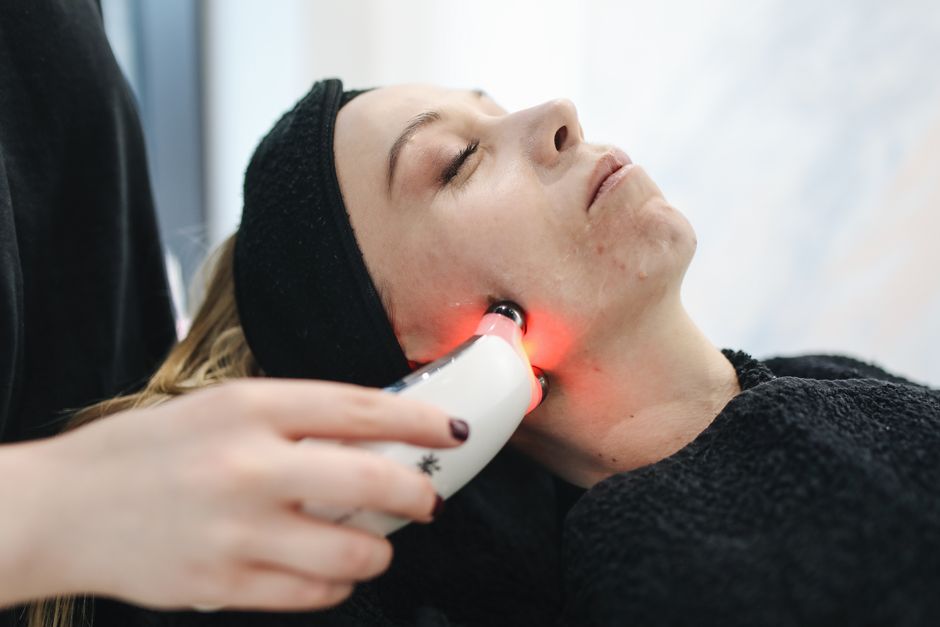
Wands and handhelds target a small area and usually pair light with warmth or massage. They are the least powerful for red light specifically, and are better treated as a spot tool than a whole-face solution.
If you are weighing a mask against a panel for the face, our LED mask vs red light panel comparison works through the trade-offs in detail.
How often should you use red light therapy?
Consistency beats intensity. Because home devices are gentle, the benefit builds through frequent, repeated exposure rather than the occasional long blast. A sensible pattern is short daily or near-daily sessions - commonly three to ten minutes for a mask, a little longer for a panel used at a distance - guided by the instructions for your specific device.
More is not automatically better. Doubling the time or pressing a panel against your skin does not speed results and often just wastes effort. Devices are designed around a set distance and duration, so following those numbers matters more than improvising. Build the session into an existing habit, such as after cleansing or before bed, and you are far more likely to reach the eight-to-twelve-week mark where any difference becomes visible.
What can red light therapy realistically do - and not do?
Framed honestly, at-home red light therapy is a maintenance tool for skin appearance. The realistic wins are gradual: smoother-looking texture, a touch more firmness and a more even tone over time, especially when paired with the basics of sun protection and a decent routine.
What it will not do is replace those basics, reverse deep structural ageing, or deliver clinic-level outcomes from a consumer gadget. It works on how skin looks, not on any medical condition, and it is not a substitute for professional advice about your skin. If a product's marketing leans on medical-sounding promises, treat that as a warning rather than a selling point.
How do you use a home device safely?
Red light therapy is generally well tolerated, but a few sensible precautions apply. Protect your eyes: use the goggles supplied or keep your eyes closed, particularly with bright panels, since staring into intense light is never wise. Start with shorter sessions to see how your skin responds before settling into a routine.
Apply the light to clean, dry, bare skin, because heavy creams or make-up can sit between the LEDs and your face. Some medicines and skincare ingredients increase sensitivity to light, so if you take anything photosensitising or use strong actives, check with a pharmacist or your GP before you start. And set aside any device that feels hot, flickers oddly or looks damaged until it has been checked.
Frequently asked questions
Does red light therapy actually work?
How long before I see results from red light therapy at home?
Is red light therapy safe to use every day?
Are expensive red light devices better than cheap ones?
Can red light therapy replace my skincare routine?
LED Mask vs Red Light Panel: Which Is Better?