Can You Use an LED Mask and Microcurrent Together?
Which facial devices can share one routine, the order to use them in, and why IPL needs an evening of its own. A practical device-stacking guide.
Combining facial devices is mostly a sequencing problem. An LED mask and a microcurrent device sit happily in the same session, because neither raises skin temperature and the two act by unrelated means. Intense pulsed light (IPL) is the one that wants a slot of its own, and for reasons that have nothing to do with the other two.
Can you use an LED mask and microcurrent together?
Yes, and in the same sitting. A microcurrent device passes a low-intensity electrical current between two electrodes, which is why it needs a conductive gel to make contact with the skin. An LED mask emits low-intensity light. Nothing about one interferes with the other.
The constraints are practical rather than technical. Microcurrent needs a conductive gel to complete its circuit; light works best with nothing opaque in the way. That single fact settles the order for you. Run the two back to back rather than at once. Session lengths in device manuals commonly run from a few minutes up to around ten, so using both is a 15 to 20 minute block at the end of the day rather than an evening's project.
What does each device actually do?
The three device categories on this page are often discussed together and do genuinely different things.
An LED mask delivers low-intensity red or near-infrared light to the surface of the skin. The underlying approach is described in the research literature as photobiomodulation (the use of low-level light to influence cell activity). Output is non-thermal, which is why sessions can be frequent and short.
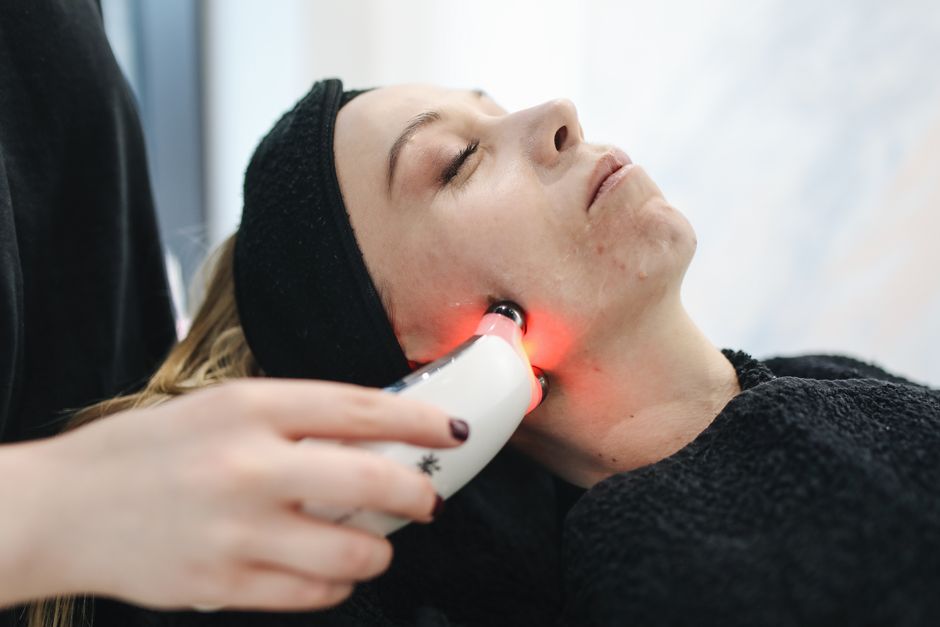
A microcurrent device passes a very low-intensity current through the skin via twin electrodes. The gel is not an optional extra sold alongside it: without a conductive medium the current has no reliable path, so the device cannot do whatever it does at all.
IPL (intense pulsed light) is the outlier. It fires broad-spectrum light that pigment absorbs and converts to heat, the principle behind intense pulsed light hair-removal appliances. Heat is the working mechanism, not a side effect, and that is what separates it from the other two.
These are cosmetic appliances, and the strength of evidence behind each category varies. Where this site discusses what a device does, it is on the basis of published research and manufacturer specifications rather than anything measured here. Our microcurrent beginner guide and red light therapy guide go into what each category does and does not have behind it.
Which order should you use them in?
Cleanse first, so you are not driving a current or shining light through the day's sunscreen and make-up.
Microcurrent comes next, with its gel. The gel needs to sit directly against skin, so this step goes before anything else is applied. When the session ends, wipe the gel off.
The LED mask follows, on bare and dry skin. Anything opaque on the surface, including a thick serum or a sheet of gel, sits between the light and your face for no benefit.
Leave-on steps come last: serums, moisturiser, oils, in whatever order your routine already uses. Doing them after the light means the mask is not pressing product around your face and the products get to stay where you put them.
Reversing the order is not dangerous, just wasteful. Applying moisturiser and then covering it with a mask spends the same 10 minutes for less light reaching skin.
Where does IPL fit, and why does it need its own slot?
For most at-home buyers IPL is a hair-removal appliance, and it works by heating pigment. Three consequences follow for anyone stacking devices.
First, the skin needs to be clean, dry and shaved, with nothing on it. Gels, serums and residual moisturiser all belong to a different step of the day. Second, the area can stay warm or a little pink afterwards, so it is a poor moment to add another appliance to the same patch of skin. Third, IPL schedules run in spaced cycles rather than daily sessions, so it does not need to share an evening in the first place.
Give it its own night. Then follow your manual on which areas the device is designed for, because facial use is restricted on many at-home units and the guidance differs between models. Skin tone and hair colour also determine whether an IPL device is suitable at all, which our IPL and skin tone guide covers in detail.
What should you avoid combining in the same session?
The order above handles the common case. A few combinations are worth keeping apart, and in each case the reason is mechanical rather than mysterious.
Strong actives on a device evening. Device manuals commonly advise leaving retinoids and exfoliating acids to a different evening from a session. Guidance varies by device and by product, so follow the manual for the appliance you own rather than a blanket rule found online. If you are unsure, separating them costs you nothing.
Anything opaque before light. Make-up, sunscreen, thick oils and heavy balms all sit between an LED array and your skin. If the mask goes on over them, the session runs for the same 10 minutes with less light arriving.
Two heat-based appliances on one area. IPL already warms the skin it targets. Adding a second heat-based device to the same patch on the same evening stacks the same effect twice for no extra benefit.
A device session on skin that is broken, sunburnt or freshly waxed. Every manual in these categories says some version of this, and it is the one instruction worth reading before the first use rather than after.
How do you know whether it is working?
This is where stacking causes the most confusion. Run two new devices at once and any change belongs to both of them, or to the fact that you started paying attention to your skin at all.
Three habits make the question answerable. Take a photo at the start, in the same light, at the same time of day, from the same angle - phone cameras and bathroom lighting are enough provided they stay consistent. Change one variable at a time, so a second device starts after the first has completed a full cycle. And judge at the end of the cycle length quoted in the manual, not at the two-week mark when nothing has had time to happen either way.
It is also worth deciding in advance what would count as no result, because a routine with no exit condition tends to continue on optimism alone.
How many rest days do you actually need?
Schedules differ by device and the manual is the authority. The broad shape across the three categories looks like this: LED sessions are short and frequent, microcurrent is a run of near-daily sessions followed by a lighter maintenance pattern, and IPL runs in spaced cycles with longer gaps before occasional top-ups.
Stacking changes none of that. It means two schedules happen to land on the same evening, not that either schedule shortens. The mistake worth naming is assuming more is better: doubling a session length or running a device twice a day because you own two of them. Manufacturer schedules are the ceiling, not a starting suggestion.
When is stacking just wasted money?
Three patterns come up repeatedly, and all three are avoidable.
Two devices doing the same job. An LED mask and a red-light panel are the same modality in different form factors. Owning both adds cost rather than capability. Our LED mask versus red light panel comparison sets out which format suits which situation.
Buying the second device before finishing a first full cycle with the first. Whatever these devices do, they do it through repetition. A second appliance does not compensate for skipped sessions on the first, and buying one is a much easier decision than using one for eight weeks.
A third device for something the first two already cover. Marketing language across categories overlaps heavily, so read what a device physically does rather than the outcome named on the box.
The honest position: one device used consistently beats three used sporadically, and it is also the only way to tell which one was doing anything.
What does a realistic weekly routine look like?
Most evenings: microcurrent, then LED
Cleanse, microcurrent with gel, wipe the gel off, LED mask on bare skin, then your leave-on products. Follow the session length in each manual rather than rounding up.
IPL on its own cycle nights
Shave, clean and dry the area, run the device, and leave that patch of skin alone afterwards. No other appliance on the same area that evening.
Keep one evening device-free
A night off makes the routine easier to sustain and costs nothing, since no schedule here requires daily use without a break.
Reassess at the end of a full cycle
Judge the routine once you have completed the cycle length in the manual, not after a fortnight. Then decide whether a second device earns its place.
What about the evening wind-down slot?
A short device session slots naturally into the end of the day, which is also why it tends to stick as a habit: it attaches to something you already do. Sitting still for 10 minutes in a mask is easier to repeat than a step that needs a spare half hour.
The wider question of evening light, screens and bedroom setup sits outside this site's remit. Our sister site Better Sleep Guide covers the sleep-environment side.
Frequently asked questions
Can you use an LED mask and microcurrent on the same day?
Does microcurrent gel need to come off before the LED mask?
Can you use IPL and an LED mask on the same area on the same evening?
Do you need all three devices?
Which device should you buy first?
Microcurrent Devices for Beginners
Are At-Home LED Masks Worth It?
LED Mask vs Red Light Panel